Although it seems dramatic, without it, our beat simply isn't as perfect, effortlessly snatched, or as durable. Just consider the pictures from the holidays.
Let us explain the fundamentals of setting powder, how to apply it correctly, and all of our professional beauty advice that will elevate your entire look if you're not (yet) as obsessed with setting powder as we are. Think of this as your masterclass in setting powder.
What is Setting Powder?
Although it can do SO much more, a setting powder is a finely ground powder used to set liquid makeup products. MORE An excellent setting powder helps your makeup last longer, reduces noon shine, and creates an airbrushed look on your face.
It can also be utilized to raise your face, contour your nose, and grab your cheekbones. Setting powder usually comes in two varieties: pressed and loose. We'll go over all of those details in a moment.
How to Use Setting Powder: Setting Powder Tip #1:
Find the Right Formula
Let's get right to the point: each type of powder has distinct advantages and can be either loose or pressed. To help you discover the best formula for your everyday needs, below are the differences between them.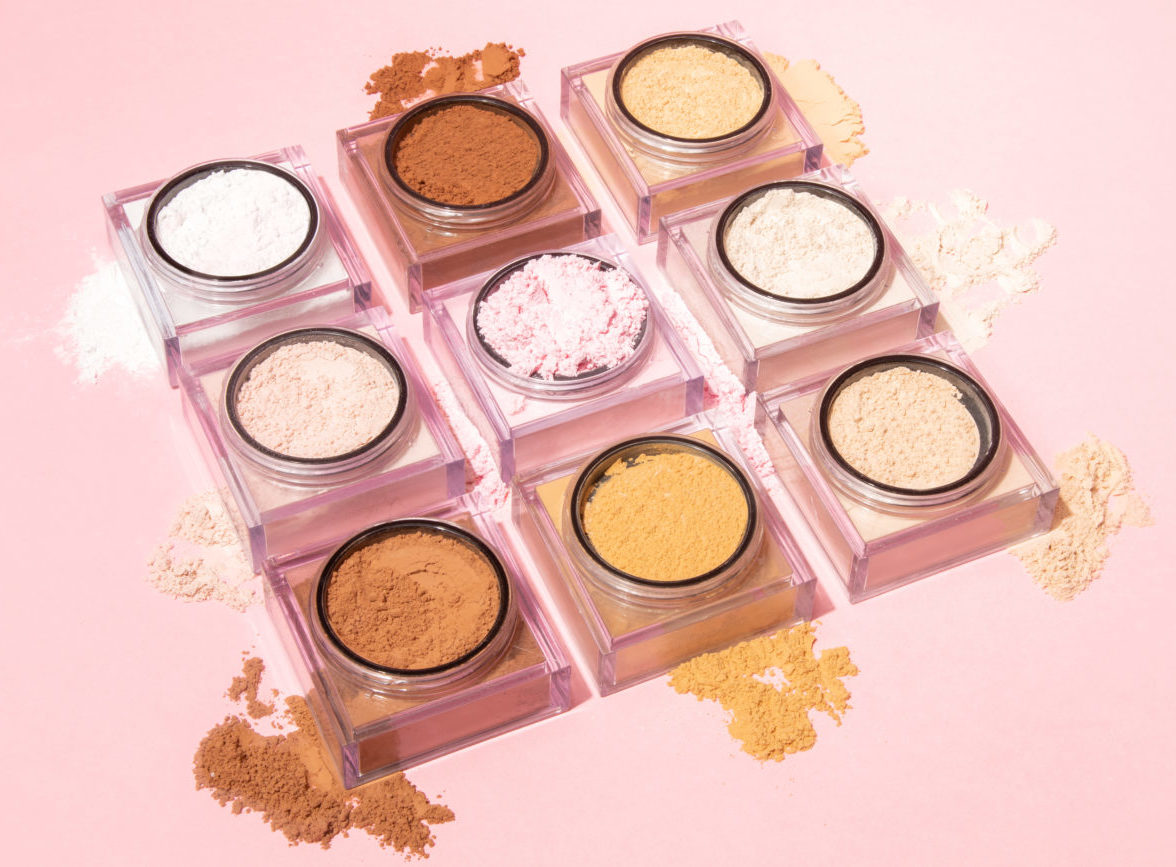 Loose setting powder: To improve staying power and give your skin a flawless finish, loose setting powder is a finely ground powder—the finer, the better—that melts and mixes in perfectly with your makeup.
Loose setting powder: To improve staying power and give your skin a flawless finish, loose setting powder is a finely ground powder—the finer, the better—that melts and mixes in perfectly with your makeup.
 There are other instruments available for setting powder application, but these three are the ones we always use to create the desired effect:
Our favorite is the Huda Beauty Easy Bake Loose Setting Powder since it snatches and smooths like no other and comes in eight hues, so you can select one that goes well with your appearance.
How to apply loose setting powder:
She is, to put it mildly, a multi-talented individual. You can use loose powder for baking your makeup, which is the process of applying a heavy layer to various parts of your face to brighten and sculpt, or you can use a thin dusting of powder to set, smooth, and mattify your makeup.
 Pressed setting powder: As the name suggests, pressed powder is a finely ground, pressed powder that creates a delicate layer of covering and usually has a softer, more natural appearance than loose powder.
It's also excellent for smoothing skin texture, extending the shelf life of cream formulae, and mattifying touch-ups while on the go. Apply pigmented pressed setting powders either by themselves or in combination with other makeup.
Our first pick is always the GloWish Luminous Pressed Powder, which gives your face with a lovely natural glow and is enriched with hydrating elements like Damescana rose oil to prevent dryness. We're so obsessed that on days when you don't want to wear makeup, you can use a medium-dense, big, fluffy brush to apply it in place of foundation because it contains pigments.
For setting makeup, you may also try the Charlotte Tilbury Airbrush Brightening Flawless Finish, which comes in two transparent colors.
Setting Powder Tip #2: Find the Right Setting Powder Shade
Let's get right to the point: each type of powder has distinct advantages and can be either loose or pressed. To help you discover the best formula for your everyday needs, below are the differences between them.
Our favorite is the Huda Beauty Easy Bake Loose Setting Powder since it snatches and smooths like no other and comes in eight hues, so you can select one that goes well with your appearance.
How to apply loose setting powder:
She is, to put it mildly, a multi-talented individual. You can use loose powder for baking your makeup, which is the process of applying a heavy layer to various parts of your face to brighten and sculpt, or you can use a thin dusting of powder to set, smooth, and mattify your makeup.
Pressed setting powder: As the name suggests, pressed powder is a finely ground, pressed powder that creates a delicate layer of covering and usually has a softer, more natural appearance than loose powder.
It's also excellent for smoothing skin texture, extending the shelf life of cream formulae, and mattifying touch-ups while on the go. Apply pigmented pressed setting powders either by themselves or in combination with other makeup.
Our first pick is always the GloWish Luminous Pressed Powder, which gives your face with a lovely natural glow and is enriched with hydrating elements like Damescana rose oil to prevent dryness. We're so obsessed that on days when you don't want to wear makeup, you can use a medium-dense, big, fluffy brush to apply it in place of foundation because it contains pigments.
For setting makeup, you may also try the Charlotte Tilbury Airbrush Brightening Flawless Finish, and comes in two transparent colors.
Setting Powder Tip #2: Find the Right Setting Powder Shade
Finding the right shade for any complexion product is like cracking a cheat code. While you’ll find many loose powders are transculent, some can leave a white cast, so we always recommend finding a shade that complements your skin tone.
It’s also important to note that you may require different shades depending on your desired result.
For instance, choose a hue that is two to three shades lighter than your complexion if you want to bake and brighten the area behind your cheekbones or under your eyes.
Fair to medium skin tones are best brightened by pink powder, such as our Easy Bake Cherry Blossom shade, while medium to rich complexion tones are best brightened by yellow-toned powders, such as the Easy Bake Banana Bread shade.
Choose a pressed powder with a shade that is comparable to the color of your foundation if you want to set your appearance with a natural finish. See our guide to shade here.
Setting Powder Tip #3: Find the Right Tool
A loose, fluffy brush: This multipurpose brush called a sista. She may be used to mattify areas that tend to get shiny, like your T-zone, or to add a small dusting of powder to your beat to set and add coverage. She will also assist with baking your makeup to get rid of extra powder.
A moist makeup sponge: In order to take up enough powder to bake, a damp sponge is necessary. For a more smooth finish, try our Basic B Sponge, which helps apply the powder to your skin evenly. For a truly airbrushed look, you can also apply loose and pressed powders to your skin with a moist makeup sponge.
A powder puff: The powder puff has made a serious comeback, and we STAN by it. It may be old school, but it also allows you to press powder into your skin for a smoother, airbrushed finish. It’s also a great baking companion.
Setting Powder Tip #4: Prep Your Skin for Powder
Since there's a lot of information, we'll keep it brief: your setting powder is more likely to settle into fine lines or creases in smile lines if your skin is dry or you haven't exfoliated recently, giving the appearance of flaky, dry skin rather than smooth skin.
To avoid this, exfoliate your skin periodically to ensure you have a smooth canvas for application. Naturally, for this stage, we always reach for the WISHFUL Yo radiance Enzyme Scrub, which is enhanced with enzymes from papaya and pineapple to exfoliate dead skin cells and boost your radiance.
J'adore!
Drinking water is the next step. We adore the WISHFUL Eye Lift & Contour Peptide Serum for the undereye region since it tightens the eye area for a flawless finish while still being really moisturizing and lightweight. Then, using the WISHFUL Honey Whip Peptide Moisturizer, which is enhanced with restorative peptides and nourishing manuka honey and makes the ideal canvas for makeup, we seal in all that glazed, juicy deliciousness.